
Akhil Bhartiya Cyber Suraksha Sangathan (Regd.)
Regd. with Registrar of Society of NCT Delhi-Regd. No-287
Cyber Criminals se Suraksha, Digital India ki Raksha
अखिल भारतीय साइबर सुरक्षा संगठन (पंजी)
भारत की पहली साइबर क्राइम इन्वेस्टीगेशन एन जी ओ
ऑनलाइन रहें सतर्क, साइबर अपराध से रहें सुरक्षित
www.abcss.org Email: [email protected]

AMIT MALHOTRA
(Cyber Crime Investigation Specialist)
Founder Akhil Bhartiya Cyber Suraksha Sangathan
18 yrs experience in crime prevention, detection and investigation. Certified Ethical Hacker from Ec-Council. Certified Cyber Crime Investigator from Asian School of Cyber Laws. Presently working in the area of cyber crime investigation.
⚠️ Common Methods Used
- CEO / boss impersonation via spoofed email
- Hacking into real business email accounts
- Fake vendor invoice with changed bank details
- Lawyer impersonation for urgent fund transfers
- Domain spoofing (e.g. [email protected])
- Man-in-the-middle email interception
- Requesting W-2, employee or tax data via email
- Fake HR emails asking for payroll redirection
✅ How to Protect Your Organisation
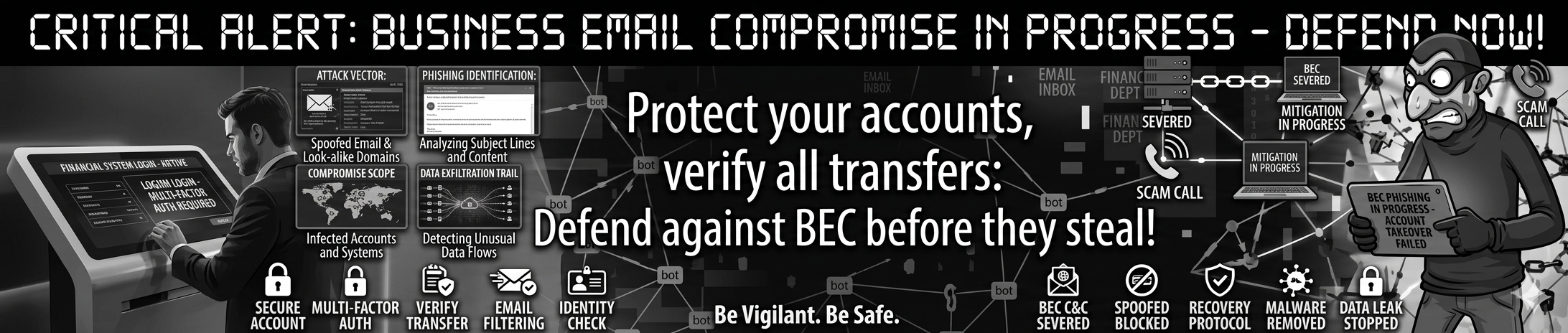
- Always verify fund transfer requests via phone call
- Set up multi-person approval for all large payments
- Enable Multi-Factor Authentication (MFA) on all email accounts
- Check sender email address carefully — not just display name
- Never change vendor bank details based on email alone
- Train all employees to recognise BEC red flags
- Use email authentication tools — DMARC, DKIM, SPF
- Establish a verbal call-back policy for all wire transfers
🚨 If Your Organisation Is a Victim
- Contact your bank immediately — request a wire transfer recall before funds are moved further
- Call National Cyber Helpline 1930 without delay — faster action improves recovery chances
- File a complaint at cybercrime.gov.in with all email headers, transaction details and account numbers
- File FIR at nearest Cyber Crime Cell — bring all email evidence, transaction receipts and communication records
- Alert your IT department to check if any email account was compromised or hacked
- Preserve all emails, email headers, chat logs and bank transfer records as evidence
- Notify your senior management, legal team and cyber insurance provider immediately
- Do NOT inform the fraudster that you have discovered the scam
CEO Fraud / Boss Impersonation
Criminals spoof or hack the CEO's or MD's email and send urgent messages to finance employees requesting immediate wire transfers to a "confidential" account. The urgency and authority of the sender pressures employees to bypass normal approval processes.
Fake Vendor / Supplier Invoice Scam
Attackers compromise or impersonate a trusted vendor's email and send a legitimate-looking invoice with updated bank account details. Payments are redirected to the fraudster's account. This is the most common BEC attack in India targeting exporters and importers.
Lawyer / Legal Counsel Impersonation
Fraudsters pose as lawyers, company solicitors or legal advisors and contact employees about a "confidential merger, acquisition or legal settlement" requiring urgent fund transfer. They exploit the seriousness of legal matters to prevent victims from double-checking.
Account Compromise (Hacked Email)
Criminals gain access to a legitimate employee or executive's actual email account through phishing or credential theft. They then monitor internal communications for weeks, study payment patterns, and strike at the right moment with a convincing fund transfer request.
Payroll Diversion Fraud
Attackers impersonate an employee and email the HR or payroll department requesting a change of bank account details for salary payment. The next payroll cycle deposits the victim's salary directly into the fraudster's account.
Domain Spoofing & Lookalike Email
Criminals register domain names nearly identical to a legitimate company (e.g. company-india.com vs companyindia.com) and send emails that appear genuine at first glance. Victims who don't check the full email address carefully are easily deceived.
Data Theft BEC (W-2 & Tax Fraud)
Instead of requesting money, attackers impersonate executives and ask HR or finance employees to email employee records, tax documents, salary details, PAN/Aadhaar data or banking information — which is then used for identity theft or sold on the dark web.
Man-in-the-Email Attack
After compromising a business email account, criminals silently monitor an ongoing payment negotiation between two parties. At the right moment, they intercept the conversation, introduce fraudulent banking details, and divert the payment — without either party suspecting anything.
IT Act Section 66: Computer-related offences including dishonest or fraudulent use of computer systems — up to 3 years imprisonment and/or fine. Applicable to all BEC attackers.
IT Act Section 66C: Identity theft using electronic means including email impersonation — up to 3 years imprisonment + ₹1 lakh fine.
IT Act Section 66D: Cheating by personation using computer resources — up to 3 years imprisonment + ₹1 lakh fine. Directly applicable to CEO fraud and vendor impersonation.
IPC 419: Punishment for cheating by personation — up to 3 years imprisonment + fine. Applicable when criminals impersonate executives, vendors or lawyers.
IPC 420: Cheating and dishonestly inducing delivery of property or funds — up to 7 years imprisonment + fine. Primary section applied in BEC fund transfer fraud.
IPC 465 & 468: Forgery and forgery for purpose of cheating — up to 7 years imprisonment + fine. Applicable to fake invoice and document fraud in BEC attacks.
IPC 120B: Criminal conspiracy — when organised groups or syndicates operate BEC campaigns, all involved members are liable under conspiracy charges.
CYBER SAFETY TIPS
COMPLAINT & POLICE STATION
Follow Us


MASSMATIC CYBER FORENSIC COURSES
- BEGINNER'S LEVEL (1 Month Training)
- ADVANCED LEVEL (6 Month Training)
- EXPERT LEVEL (18 Months Training)
- CERTIFIED CYBER CRIME INVESTIGATION OFFICER (3 Months Training)
- COMPUTER HACKING FORENSIC INVESTIGATOR (3 Months Training)
- CYBER COMMANDO TRAINING V3.0 (3 Months Training)
- FREE CYBER SECURITY & AWARENESS COURSE (Register Here)