
Akhil Bhartiya Cyber Suraksha Sangathan (Regd.)
Regd. with Registrar of Society of NCT Delhi-Regd. No-287
Cyber Criminals se Suraksha, Digital India ki Raksha
अखिल भारतीय साइबर सुरक्षा संगठन (पंजी)
भारत की पहली साइबर क्राइम इन्वेस्टीगेशन एन जी ओ
ऑनलाइन रहें सतर्क, साइबर अपराध से रहें सुरक्षित
www.abcss.org Email: [email protected]

AMIT MALHOTRA
(Cyber Crime Investigation Specialist)
Founder Akhil Bhartiya Cyber Suraksha Sangathan
18 yrs experience in crime prevention, detection and investigation. Certified Ethical Hacker from Ec-Council. Certified Cyber Crime Investigator from Asian School of Cyber Laws. Presently working in the area of cyber crime investigation.
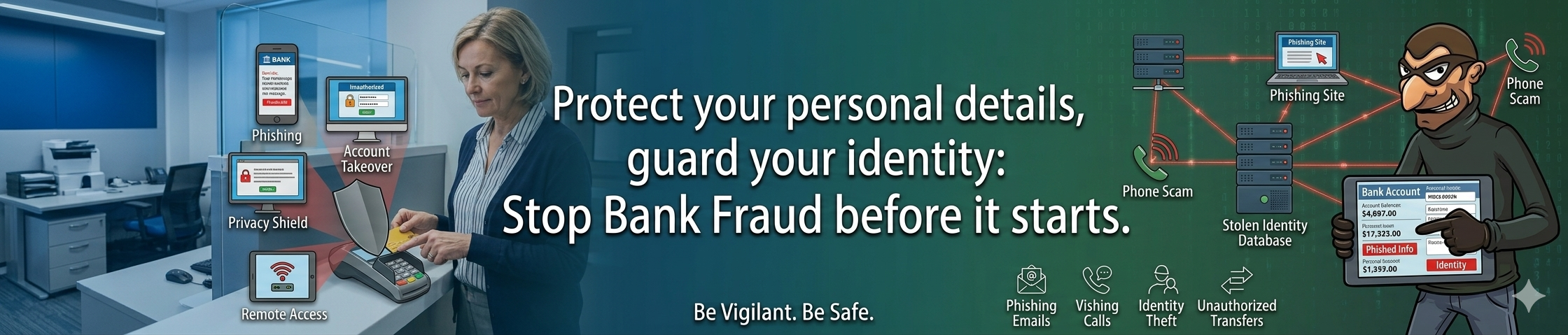
⚠️ Common Methods
- Phishing emails mimicking bank websites
- Fake banking apps on app stores
- SIM swapping to intercept OTPs
- Vishing calls posing as bank officials
- Cheque fraud & forgery
- KYC update scams via phone/link
- Screen sharing / remote access fraud
- Fake UPI payment request scams
✅ How to Protect Yourself
- Never click unknown links in SMS or email
- Download banking apps only from official stores
- Never share OTP, PIN or password with anyone
- Enable 2-factor authentication on all accounts
- Set transaction limits and SMS/email alerts
- Verify UPI collect requests before approving
- Never share screen with unknown persons
- Regularly monitor bank statements
🚨 If You Are a Victim
- Immediately call your bank's 24×7 helpline and freeze the account
- Call National Cyber Helpline 1930 to report the fraud
- File a complaint at cybercrime.gov.in with all transaction details
- File FIR at your nearest Cyber Crime Cell or police station
- Preserve all SMS alerts, email screenshots and transaction IDs as evidence
- Do not tamper with or delete any messages, call logs or digital evidence
- Contact your bank's fraud department to initiate chargeback/reversal
Phishing & Smishing
Criminals send fake emails or SMS messages that appear to be from your bank, directing you to a fraudulent website to steal your login credentials and account details.
SIM Swap Fraud
Fraudsters convince your telecom operator to issue a new SIM card with your number, allowing them to receive your banking OTPs and gain full access to your accounts.
Vishing (Bank Official Impersonation)
Fraudsters call posing as bank representatives, RBI officials or customer care executives and trick you into sharing account details, OTP, CVV or PIN.
KYC Update Scam
Victims receive fake messages saying their KYC is expired and must be updated via a link. Clicking the link leads to a phishing page designed to steal banking credentials.
Fake UPI / Payment Request Fraud
Scammers send UPI collect requests pretending to send money. Victims enter their PIN thinking they are receiving funds but instead authorize a payment to the fraudster.
Remote Access / Screen Sharing Fraud
Criminals convince victims to install remote access apps like AnyDesk or TeamViewer, then take control of their phone or computer to access banking apps and transfer funds.
Cheque Fraud & Forgery
Criminals alter, forge or wash cheques to change the payee name or amount. They may also use stolen blank cheque leaves to draw unauthorized amounts from victim accounts.
Fake Banking App Fraud
Malicious banking apps that look identical to official bank apps are spread via WhatsApp or fake websites. These apps steal login credentials and OTPs directly from your phone.
IT Act Section 66: Punishes computer-related offences including unauthorized access and data theft — up to 3 years imprisonment and/or fine.
IT Act Section 66C: Identity theft using electronic signatures, passwords or unique identifiers — up to 3 years imprisonment + ₹1 lakh fine.
IT Act Section 66D: Cheating by impersonation using computer resources — up to 3 years imprisonment + ₹1 lakh fine.
IPC 420: Cheating and dishonestly inducing delivery of property — up to 7 years imprisonment + fine.
IPC 465 & 468: Forgery and forgery for purpose of cheating — up to 3 to 7 years imprisonment + fine.
IPC 471: Using forged documents as genuine — up to 7 years imprisonment + fine.
CYBER SAFETY TIPS
COMPLAINT & POLICE STATION
Follow Us


MASSMATIC CYBER FORENSIC COURSES
- BEGINNER'S LEVEL (1 Month Training)
- ADVANCED LEVEL (6 Month Training)
- EXPERT LEVEL (18 Months Training)
- CERTIFIED CYBER CRIME INVESTIGATION OFFICER (3 Months Training)
- COMPUTER HACKING FORENSIC INVESTIGATOR (3 Months Training)
- CYBER COMMANDO TRAINING V3.0 (3 Months Training)
- FREE CYBER SECURITY & AWARENESS COURSE (Register Here)